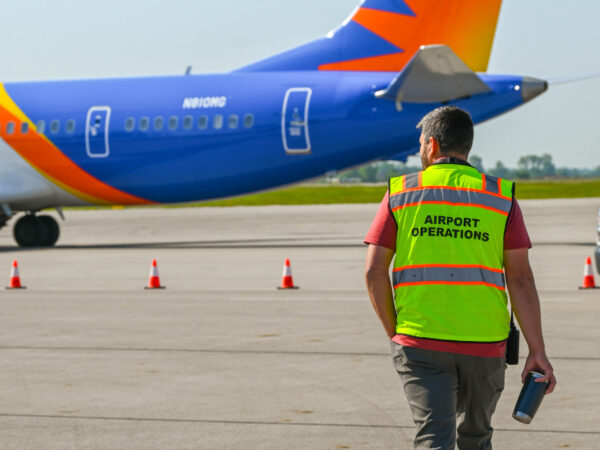

Safety is our top priority for everyone at the airport.
This means that any time an incident occurs, our teams work quickly and with each other to respond through the crisis. We have clear action plans set in place, and every year, we put our crisis response to the test through a full-scale airport emergency simulation.
Here’s what you need to know about the upcoming emergency simulation scheduled for Thursday, September 17, at CMH.
Commercial airports are required to test their emergency preparedness
The FAA requires commercial airports like John Glenn Columbus International Airport (CMH) to test their Airport Emergency Plan through an exercise at least once every 3 years.
For the Columbus Regional Airport Authority, exercises rotate once a year across the three airports managed by the authority: Rickenbacker International Airport, Bolton Field, and CMH, where this year’s exercise is taking place.
What to expect during an exercise
An exercise brings an airport’s emergency response plan to life through a realistic but simulated major emergency.
Simulations typically involve:
- An aircraft accident or crash scene
- Volunteer “passengers” portrayed as injured victims, sometimes complete with theatrical makeup and fake injuries
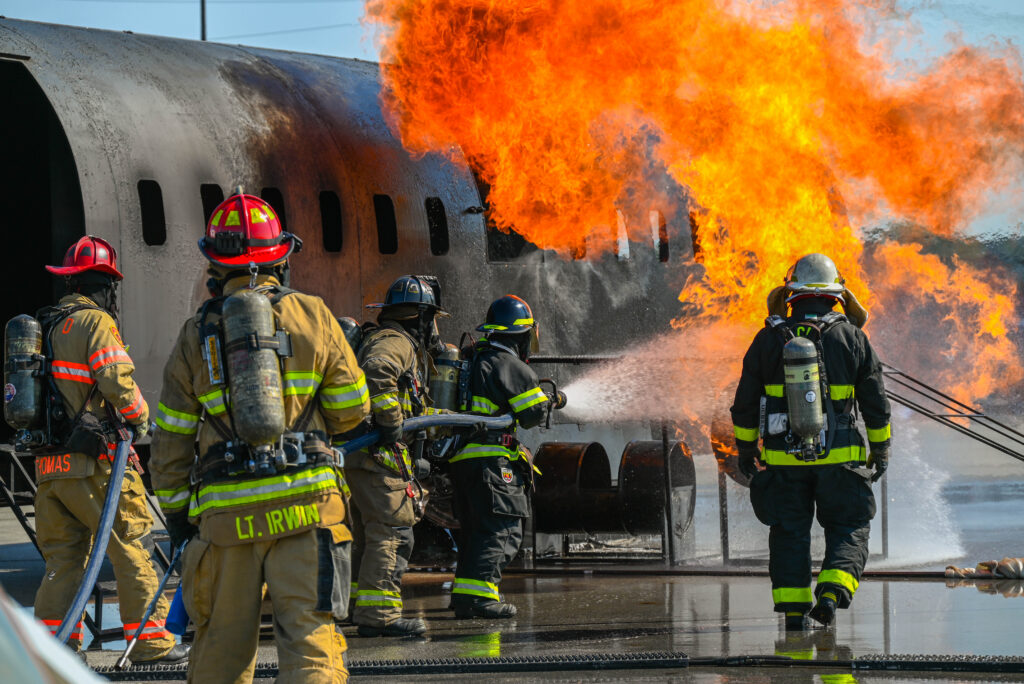
- Airport police and fire responding as they would to an actual emergency (live fire trainings are also held periodically at CMH)
- Local fire departments, EMS, hospitals, and law enforcement
- Airlines and airport operations teams
- Emergency management agencies
- Communications/public information teams
- Family assistance and passenger support functions
- Sometimes federal partners such as the FAA or FBI, depending on the scenario
The emergency unfolds in real time. Responders may not know every detail ahead of time because part of the test is seeing how well they communicate, work together, make decisions, and adapt when new information arrives.
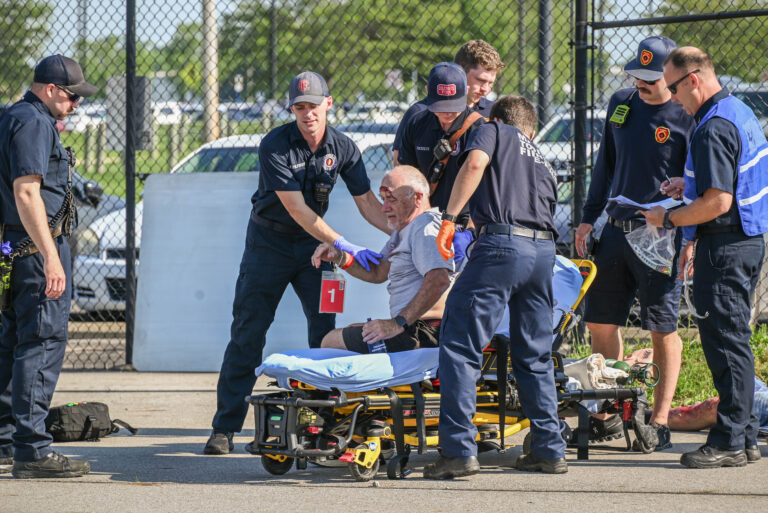
EMTs and emergency workers help a man onto a stretcher during the emergency exercise at Rickenbacker International Airport in summer 2025.
What an exercise evaluates
Exercises evaluate whether emergency notifications work, how quickly responders arrive, whether different agencies can communicate with one another, how patients are triaged and transported, how the airport establishes an incident command structure, how information reaches the public and media, and how normal airport operations are managed around the emergency.
During an exercise, communication moves between multiple agencies, just as it would during a real emergency. Our communications team drafts statements for social media, the airport website, and the press, then moves those messages through the appropriate approval process. Depending on the scenario, that may include airport leadership as well as outside agencies leading or involved in the response. Once approved, the information is released to the public.
There are usually evaluators observing throughout the exercise. The simulation ends with everyone debriefing and developing a report identifying what worked, what didn’t, and what should change.
Remember, it's just a test
Expect air service to operate as normal during the full-scale exercise.
Airport activity might look and sound a little different as our workers conduct the exercise, but air service will still be flying as normal. If you listen to the radios, you’ll hear more emergency traffic than usual, but remember, it’s just a test.
Thank you for your patience and cooperation as we simulate our full-scale exercise. When the real emergency comes, we’ll be ready.