

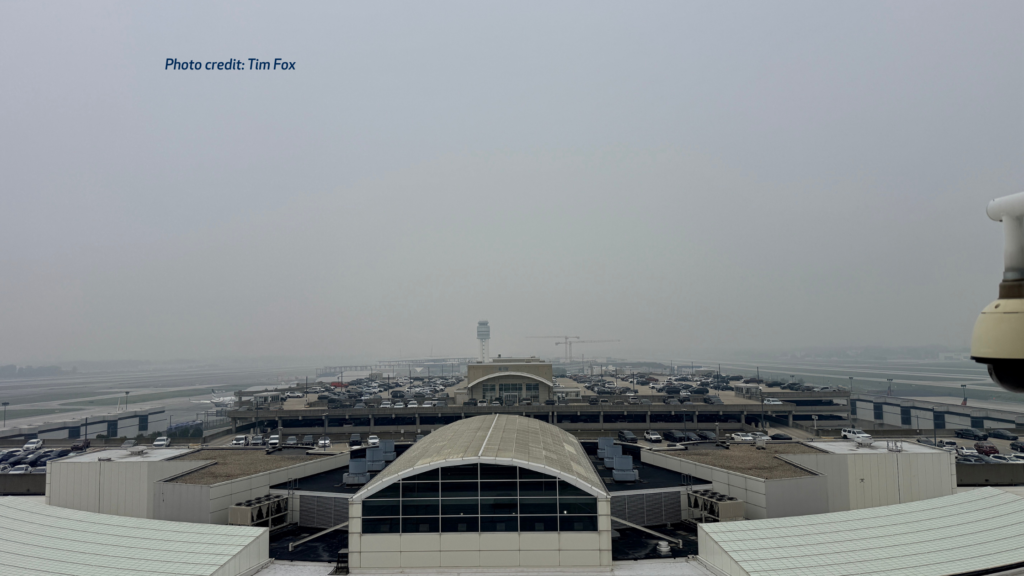
If you’ve stepped outside recently, you’ve noticed the haze.
Smoke from ongoing Canadian wildfires has drifted into parts of the United States, leading to air quality alerts across much of the Midwest and Northeast, especially here in Columbus. While poor outdoor air quality can make people think twice about spending time outside, it also raises another question:
Is it safe to fly when the air quality is poor?
The short answer is yes.
The air inside an airplane is much cleaner than many people realize
While the view outside may be hazier than usual, modern aircraft are designed with sophisticated filtration systems that keep the cabin air clean and comfortable throughout your flight.
On most commercial aircraft:
- Cabin air is refreshed every two to three minutes
- Approximately half of the air comes from outside the aircraft and half is recirculated through High Efficiency Particulate Air (HEPA) filters
- Those HEPA filters remove 99.97% of airborne particulate matter, including smoke particles, dust, bacteria, and many other contaminants before the air re-enters the cabin
That means even when outdoor air quality is poor, the air inside the aircraft remains highly filtered and continually refreshed.
What does wildfire smoke mean for airport operations?
Poor air quality doesn’t automatically mean flights stop.
At airports, operations continue to be guided by one thing above all else: safety.
Airport operations teams, airlines, pilots, and the Federal Aviation Administration (FAA) continuously monitor weather conditions, including visibility, cloud ceilings, wind, and other factors that can affect flight operations.
While wildfire smoke can sometimes reduce visibility, especially closer to active fires, modern aircraft are equipped to operate safely in a wide range of weather conditions. If visibility drops below established safety minimums, operations may slow, flight paths might be adjusted, or in some cases, delays of departures and arrivals can occur until conditions improve.
For smoke events like the one we’re experiencing in Ohio right now, airport operations continue as normal while teams closely monitor changing conditions.
Behind the scenes: How CMH monitors weather
Whether it’s thunderstorms, snow, fog, or wildfire smoke, we’re constantly monitoring the environment around us.
Airport operations staff stay in close communication with the FAA and airline operations teams, as well as consistently checking National Weather Service alerts and radar maps.
That coordination allows everyone to respond quickly if conditions change, while keeping passengers informed and flights moving safely whenever possible.
Before you head to the airport
If you’re traveling during periods of poor air quality:
- Check local air quality alerts.
- Give yourself extra time so you can avoid unnecessary exertion outdoors.
- Stay hydrated, especially if you’re sensitive to smoke – and remember to bring your own refillable water bottle with you to refill at our water stations post-security.
- Keep an eye on your airline’s app for schedule updates.
As always, our team and our airline partners continue to monitor weather and environmental conditions to help ensure every flight operates as safely as possible.